Why Mentorship Shapes Identity, Confidence, and Direction


Mentorship is the experience of being guided, supported, and shaped by someone whose insight, presence, or example helps you see yourself and your direction more clearly. At its healthiest, mentorship can create a sense of safety, confidence, and possibility, especially during periods of uncertainty, transition, or personal growth.
The Emerge In Time Model helps explain why growth can feel slow, uneven, or emotionally complex while still being meaningful. It encourages patience with yourself and recognizes that lasting change is often built gradually through awareness, support, resilience, and continued effort.
Why It Happens
Humans Develop Through Relationships
People rarely build identity, confidence, or direction completely alone. Much of how you understand yourself is influenced through relationships with people who offer encouragement, perspective, accountability, knowledge, or emotional steadiness.
Mentorship often becomes meaningful during moments when you are searching for clarity, belonging, capability, or purpose. A mentor may help organize experiences that previously felt confusing, disconnected, or overwhelming. Over time, this guidance can influence how you think, make decisions, handle setbacks, and imagine your future.
Environment, Timing, and Readiness Matter
Mentorship is also shaped by external conditions. Family systems, school environments, workplaces, communities, cultural expectations, and access to opportunities can all affect whether supportive mentorship becomes available or absent.
The impact of mentorship is rarely about one conversation or one piece of advice. More often, it develops through repeated experiences over time. Consistent encouragement, honest feedback, emotional safety, and practical guidance can gradually strengthen confidence and self-trust. In contrast, environments filled with instability, isolation, criticism, or unclear expectations may leave people feeling directionless even when they are highly capable.
Within the Emerge In Time Model, mentorship is not viewed as a shortcut to transformation. It is part of a longer process where support, reflection, learning, and intentional action slowly help a person build a more stable and aligned life direction.
Common Misconceptions
A mentor is supposed to fix your life.
Mentorship can provide guidance and support, but it cannot remove every difficulty or make decisions for you. Growth still unfolds through your own reflection, experiences, and choices over time.
Needing mentorship means you are weak or incapable.
Many capable people seek mentorship during periods of growth, transition, uncertainty, or ambition. Wanting guidance is often a sign of investment in learning rather than inadequacy.
Good mentorship always feels comfortable.
Helpful mentorship sometimes includes challenge, accountability, or difficult reflection. Supportive guidance can feel stretching while still remaining respectful and emotionally safe.
If mentorship is working, change should happen quickly.
Identity, confidence, and direction usually develop gradually. Sustainable growth often involves periods of confusion, practice, setbacks, and reassessment before visible progress appears.
One mentor should meet every need.
Different mentors may support different parts of life. One person may help professionally, another emotionally, and another through example or wisdom. Healthy support systems are often broader than a single relationship.
Observable Signs
Not all signs appear in all people, and experiences can change over time. Some people may notice only a few of these patterns.
- Feeling more emotionally grounded after conversations with a trusted guide or supportive person
- Beginning to see strengths, possibilities, or future goals more clearly
- Increased willingness to try new challenges or take thoughtful risks
- Seeking reassurance, perspective, or feedback during periods of uncertainty
- Becoming more reflective about values, identity, and long-term direction
- Feeling conflicted between personal goals and external expectations
- Struggling with self-doubt when guidance or support is absent
- Repeating cycles of hesitation, avoidance, or second-guessing without trusted support
- Feeling emotionally dependent on one source of validation or direction
- Growing awareness of patterns, habits, or blind spots that were previously difficult to recognize
- Becoming more hopeful, motivated, or purposeful over time through consistent encouragement
- Feeling overwhelmed by too many opinions or unclear guidance from different people
What Often Helps
Consistent and Trustworthy Support
Relationships that feel emotionally safe and steady often help people process uncertainty more clearly. Consistency can reduce confusion and strengthen self-trust over time.
Guidance That Encourages Thinking, Not Dependence
Mentorship tends to help most when it encourages reflection, problem-solving, and gradual confidence building rather than creating pressure to copy another person’s path exactly.
Environments That Allow Growth Over Time
People often grow more steadily when they have room to learn, make mistakes, ask questions, and develop skills without constant fear of judgment or failure.
Honest Feedback Given With Care
Clear and respectful feedback can help people recognize strengths, blind spots, and opportunities for growth without damaging their sense of worth.
Readiness for Reflection and Change
Mentorship is often more effective when a person is emotionally ready to reflect, experiment, and engage with growth gradually rather than forcing immediate transformation.
What Often Worsens It
Overdependence on External Validation
When confidence becomes tied entirely to another person’s approval, people may lose connection with their own judgment, identity, or internal direction.
Pressure for Immediate Answers or Rapid Transformation
Urgency can create frustration when growth unfolds more slowly than expected. Identity and confidence usually strengthen through repetition and lived experience, not instant clarity.
Inconsistent or Emotionally Unsafe Guidance
Support that is unpredictable, dismissive, overly controlling, or critical can increase confusion, anxiety, and self-doubt rather than helping someone grow.
Comparing Your Growth to Other People
Constant comparison can make personal progress feel inadequate or delayed. Different people develop confidence, clarity, and direction at different paces and under different circumstances.
Ignoring Personal Limits or Readiness
Growth often becomes harder when people push themselves beyond emotional capacity, avoid rest, or try to force changes before they are prepared to sustain them.
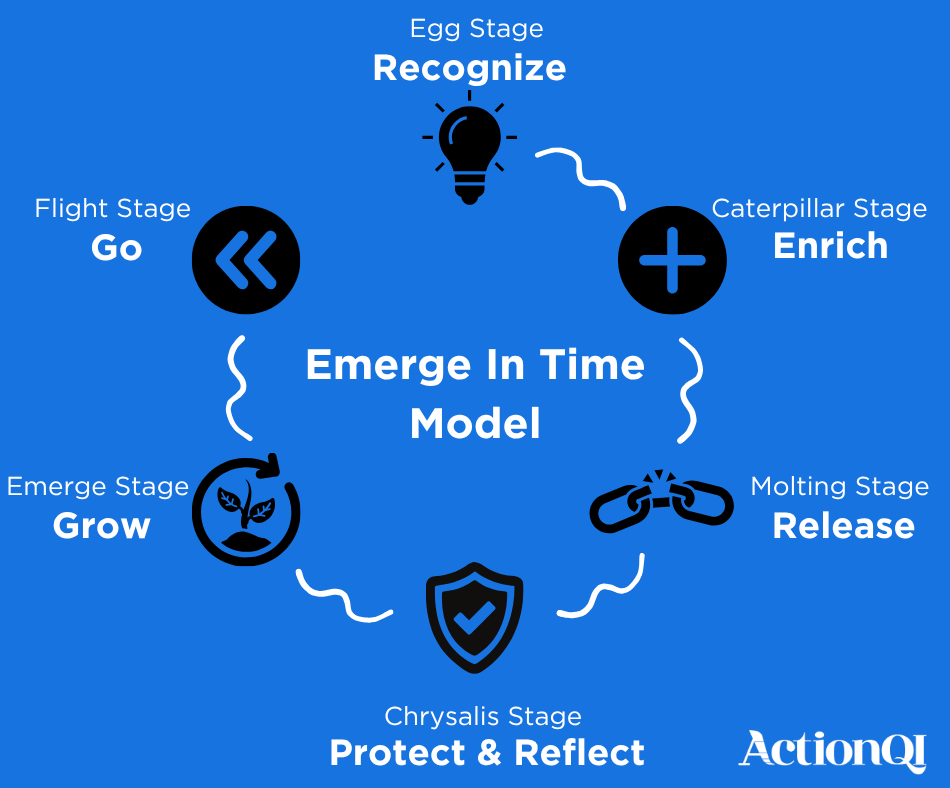
Understanding Mentorship Through the Emerge In Time Model
Mentorship rarely changes a person through one conversation, one breakthrough, or one decision. More often, it shapes identity, confidence, and direction through repeated experiences of learning, reflection, support, challenge, and practice over time.
The Emerge In Time Model helps explain why growth can feel slow, uneven, or emotionally complex while still being meaningful. It encourages patience with yourself and recognizes that lasting change is often built gradually through awareness, support, resilience, and continued effort.
Recognize — Egg Stage
In the Recognize stage, mentorship often begins with awareness. You may start noticing areas where you feel uncertain, stuck, disconnected, or overwhelmed. Sometimes this awareness comes from frustration, repeated setbacks, emotional exhaustion, or a growing sense that you need guidance to move forward more clearly. At this stage, mentorship may simply look like exposure to someone who helps you ask better questions about your life, goals, relationships, or patterns.
Progress during this stage is not about having answers yet. It is about becoming more honest about where support, growth, or direction may be needed. You may begin identifying the types of guidance, encouragement, or wisdom that feel missing in your life.
You do not need to fully understand your future before beginning to pay attention to what feels misaligned or unsupported.
Enrich — Caterpillar Stage
In the Enrich stage, mentorship becomes more active and developmental. You may begin seeking knowledge, skills, experiences, habits, or relationships that strengthen your confidence and understanding. This often includes learning how to communicate more clearly, make decisions more thoughtfully, regulate emotions more effectively, or pursue goals with greater structure and intention.
Mentorship during this stage often feels encouraging but also stretching. You may feel hopeful one day and uncertain the next as new ideas challenge old assumptions. Progress here usually looks like increased curiosity, openness to feedback, and willingness to practice new behaviors even before they feel natural or comfortable.
This stage is less about dramatic transformation and more about building nourishment for long-term growth. Small shifts in thinking, routines, and support systems often matter more than immediate results.
Growth does not need to feel confident to still be real.
Release — Molting Stage
The Release stage often involves recognizing beliefs, habits, or relational patterns that no longer support healthy growth. Through mentorship, you may begin noticing how fear, shame, perfectionism, people-pleasing, avoidance, or dependence on external approval have shaped your decisions and sense of identity.
This stage can feel emotionally uncomfortable because letting go often creates uncertainty before stability returns. You may question long-held assumptions about success, worth, relationships, or who you are supposed to become. Mentorship here may involve supportive accountability, honest conversations, or learning how to separate your identity from unhealthy expectations or past experiences.
Progress during this stage is usually quieter than people expect. It may look like pausing before reacting, setting healthier boundaries, tolerating discomfort without shutting down, or becoming less controlled by old fears.
Releasing old patterns is not losing yourself. It is creating space for healthier ways of living and relating.
Protect and Reflect — Chrysalis Stage
In the Protect and Reflect stage, mentorship often shifts from constant input toward deeper reflection and stabilization. You may become more intentional about protecting your emotional energy, attention, boundaries, and environment while evaluating what is genuinely helping your growth.
This stage frequently feels slower and more internal. You may need periods of quiet reflection to process what you are learning and decide which changes align with your values and direction. Mentorship here may involve fewer dramatic conversations and more consistent encouragement, thoughtful questions, or guidance that helps you evaluate progress honestly without harsh self-judgment.
Progress often looks like increased self-awareness, clearer boundaries, improved emotional regulation, or greater ability to notice what strengthens versus drains your growth. Small adjustments become important during this phase because sustainable change is being reinforced.
Slower seasons of reflection are not signs of failure. They are often where deeper stability begins forming.
Grow — Emerge Stage
In the Grow stage, mentorship often helps you develop resilience through experience rather than theory alone. You may begin applying what you have learned in more visible ways while also realizing that setbacks, discomfort, and imperfect attempts are still part of growth.
This stage can feel both empowering and vulnerable. You may notice increased confidence in some areas while still struggling in others. Mentorship during this period often involves encouragement to continue practicing even when progress feels inconsistent. Instead of measuring growth only by outcomes, you begin recognizing the value of persistence, recovery, adaptability, and learning through real-life challenges.
Progress here may look like returning to healthy habits after setbacks, speaking with greater confidence, making more aligned decisions, or trusting yourself more during uncertainty. The focus becomes less about perfection and more about sustainable movement forward.
Struggling at times does not erase growth. Resilience is often built through repeated attempts, not flawless performance.
Go — Flight Stage
In the Go stage, mentorship becomes integrated into everyday life rather than feeling like a temporary intervention. You may begin living with greater clarity, steadiness, and intentionality while continuing to practice the habits, perspectives, and boundaries that support long-term growth.
This stage does not mean all uncertainty disappears. Instead, it reflects a growing ability to navigate life with stronger self-awareness and direction. Mentorship may continue through ongoing relationships, community, reflection, or even your own ability to support and encourage others from lived experience.
Progress during this stage often looks practical and steady rather than dramatic. You may notice healthier relationships, more grounded decision-making, greater emotional balance, or increased confidence in handling challenges without becoming overwhelmed by them.
Lasting growth is not about reaching a perfect final version of yourself. It is about continuing to live intentionally while adapting, learning, and growing over time.
Understanding mentorship more deeply can change the way you view growth, direction, confidence, and even the struggles that come with uncertainty. Many people spend years believing they are falling behind when they are actually in the middle of a longer learning process that requires support, reflection, patience, and time. Awareness alone can be an important turning point because it creates space to respond more intentionally rather than reacting through pressure or self-criticism.
The Emerge In Time Model reminds us that change is rarely immediate or perfectly linear. People often revisit stages many times throughout life as new experiences, relationships, and challenges shape them in different ways. Growth tends to deepen through practice, reflection, setbacks, resilience, and continued learning, not force.
If you would like to explore mentorship more deeply, the eWorkbook Molding the Mentor: Impactful Practices for Enlightening Guidance offers additional guidance, reflection tools, and practical support for navigating growth over time. You can also sign up to become a free member at ActionQI to access free guides and additional resources designed to support ongoing personal development at a steady and sustainable pace.