How Overbearing Behavior Develops and Why It Feels So Draining


Overbearing behavior happens when someone tries to control, direct, monitor, or influence others in ways that feel excessive, intrusive, or emotionally heavy. It can come across as constant advice, pressure, correction, questioning, or involvement that leaves little room for autonomy or emotional breathing space.
For the person on the receiving end, it often feels draining because their thoughts, choices, or boundaries may feel repeatedly overridden, doubted, or managed. Even when the intentions behind the behavior are caring or protective, the ongoing intensity can create tension, exhaustion, confusion, or emotional shutdown over time. The Emerge In Time Model helps frame change as a gradual and intentional process. Instead of expecting immediate transformation, the model encourages awareness, practice, patience, reflection, and steady growth.
Why Overbearing Behavior Happens
Internal Patterns Beneath the Behavior
Overbearing behavior often develops from a mix of fear, responsibility, insecurity, stress, or a strong need to prevent problems before they happen. Some people learned early in life that staying highly involved, hyper-aware, or in control was necessary for safety, stability, or emotional connection.
In some cases, the behavior becomes tied to identity. A person may feel valuable when they are fixing, guiding, protecting, or managing situations for others. Over time, this can make it difficult for them to step back, tolerate uncertainty, or trust other people’s decision-making processes.
The behavior is often less about dominance alone and more about discomfort with vulnerability, unpredictability, or emotional risk.
Relational and Environmental Contributors
Overbearing dynamics are also shaped by relationships and environments. High-pressure family systems, unstable environments, cultural expectations, financial stress, caregiving burdens, or past experiences of betrayal or chaos can all reinforce controlling patterns.
These dynamics usually develop gradually rather than appearing suddenly. Small moments of over-involvement can slowly become normalized within relationships until both people begin feeling emotionally strained, unheard, or stuck in repeating cycles.
Common Misconceptions About Overbearing Behavior
If someone is overbearing, they must not care about me.
Overbearing behavior can exist alongside genuine care, concern, or love. The problem is often the intensity, control, or lack of emotional space, not necessarily the absence of caring.
If I feel drained by someone, I’m being selfish.
Feeling emotionally exhausted does not automatically mean you are uncaring or ungrateful. Constant pressure, monitoring, or emotional intensity can overwhelm a person’s sense of autonomy and emotional balance.
People only act overbearing on purpose.
Some people are aware of their behavior, while others are repeating learned patterns without fully recognizing their impact. Awareness and intention are not always the same thing.
The only solution is to cut people off immediately.
Distance can help in some situations, but not all overbearing relationships require complete separation. Sometimes change happens through clearer boundaries, gradual awareness, different communication patterns, and shifts in relational roles over time.
If I just explain myself better, the behavior will stop.
Clear communication can help, but deeply rooted patterns often involve emotional habits, fears, and relational dynamics that take time to shift. Understanding alone does not always create immediate behavioral change.
Observable Signs of Overbearing Behavior
Not all signs appear in all people, and the intensity can vary across relationships and situations.
- Frequent unsolicited advice or correction, even in situations where help was not requested
- Repeated questioning about decisions, plans, relationships, or personal choices
- Difficulty allowing space for independent problem-solving
- Feeling emotionally tense, monitored, or mentally exhausted around certain interactions
- Conversations becoming one-sided, with little room for disagreement or autonomy
- Pressure to respond quickly, explain yourself constantly, or justify ordinary choices
- Guilt, anxiety, or emotional shutdown after interactions
- A pattern of stepping into situations before others have had time to think or act for themselves
- Increased conflict around boundaries, privacy, or personal decision-making
- Feeling responsible for managing another person’s emotional reactions
- Fear of disappointing someone because of how intensely they react or involve themselves
- Emotional fatigue from needing to constantly reassure, update, or accommodate someone else’s concerns
What Often Helps
Increased Awareness of Relational Patterns
When people begin recognizing repeating interaction cycles rather than focusing only on isolated moments, conversations often become less reactive and more reflective.
Gradual Boundary Development
Clearer emotional, conversational, or practical boundaries can reduce resentment and confusion over time. Boundaries tend to work best when they are developed consistently rather than only during moments of frustration.
Emotional Regulation and Tolerance for Uncertainty
Learning to tolerate discomfort, uncertainty, or lack of control can reduce the urge to over-manage others. This process usually develops gradually rather than all at once.
Space for Independent Decision-Making
Relationships often become less strained when people are allowed room to think, make choices, and experience consequences without constant intervention.
Timing and Readiness
Change tends to happen more effectively when people feel emotionally safe enough to reflect on patterns without immediately feeling attacked, dismissed, or shamed. This aligns with the Emerge In Time Model, where meaningful change develops through intentional stages of awareness, reflection, adjustment, and practice over time.
What Often Worsens It
Constant Escalation During Conflict
Repeated arguments, defensiveness, or emotional pressure can strengthen controlling patterns instead of reducing them, especially when conversations happen during moments of overwhelm.
Shame-Based Responses
Labeling someone as “too controlling” or “the problem” without understanding underlying patterns can increase defensiveness and reduce openness to change.
Unrealistic Expectations for Immediate Change
Long-standing relational habits often take time to shift. Pressure for instant transformation can create discouragement or repeated setbacks.
Avoidance Without Communication
Silence, emotional withdrawal, or passive avoidance may temporarily reduce tension, but unresolved dynamics often resurface later in more intense ways.
Chronic Stress and Emotional Exhaustion
Financial strain, caregiving pressure, unstable environments, burnout, or unresolved emotional pain can intensify overbearing behavior by increasing fear, urgency, and emotional reactivity.
Understanding Change Through the Emerge In Time Model
Overbearing behavior rarely changes through a single realization or one difficult conversation. The patterns connected to control, pressure, over-involvement, or emotional intensity are often built over time through experiences, fears, habits, and relationship dynamics.
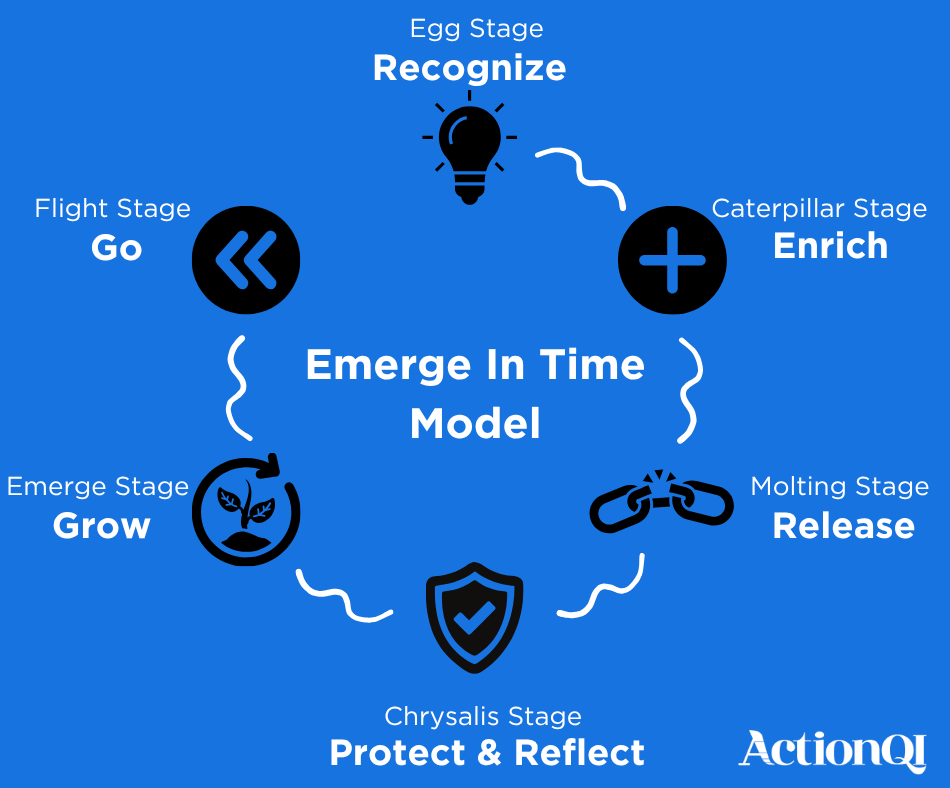
The Emerge In Time Model helps frame change as a gradual and intentional process. Instead of expecting immediate transformation, the model encourages awareness, practice, patience, reflection, and steady growth. Progress often happens in smaller shifts that become more meaningful through consistency over time.
Recognize – Egg Stage
In the Recognize stage, a person begins noticing the emotional and relational impact of overbearing behavior more clearly. They may start seeing recurring patterns such as interrupting others’ independence, over-explaining, monitoring decisions, stepping in too quickly, or feeling intense anxiety when situations are outside their control. For someone on the receiving end, this stage may involve realizing how emotionally draining certain interactions have become and understanding that exhaustion is not simply “being too sensitive.”
This stage is often uncomfortable because awareness can bring guilt, defensiveness, confusion, or grief. Many people begin questioning where these patterns came from and what emotional needs may be underneath them. Progress in this stage is not about fixing everything immediately. It is about becoming more honest and observant without collapsing into shame.
Awareness is progress, even before behavior changes.
Enrich – Caterpillar Stage
In the Enrich stage, people begin introducing healthier ways of relating, communicating, and responding. Someone working through overbearing tendencies may start practicing listening without immediately correcting, advising, or intervening. They may learn emotional regulation skills, develop greater tolerance for uncertainty, or explore healthier ways to express care without over-managing others.
For the person affected by overbearing behavior, this stage may involve strengthening boundaries, rebuilding confidence in their own judgment, or learning how to communicate needs more clearly and calmly. Growth here often feels uneven because old habits still surface during stress, conflict, or fear.
Progress in this stage looks like increased emotional flexibility, even in small moments. A conversation that becomes slightly less controlling or a pause before reacting can represent meaningful development.
Small relational shifts can create larger emotional changes over time.
Release – Molting Stage
The Release stage involves letting go of beliefs, fears, or behaviors that no longer support healthy relationships. A person may begin recognizing that constant involvement does not necessarily create safety, closeness, or respect. They may confront fears such as “If I stop managing everything, things will fall apart” or “If I am not constantly helping, I will lose connection or value.”
This stage can feel emotionally vulnerable because familiar behaviors often provided a sense of identity, protection, or stability. Letting go may create temporary discomfort, uncertainty, or emotional exposure. For those receiving overbearing behavior, this stage may involve releasing guilt tied to setting boundaries or reducing emotional over-accommodation.
Progress during Release is not perfection or emotional calm all the time. It is the willingness to loosen patterns that have become emotionally exhausting, even when doing so feels unfamiliar.
Releasing old patterns does not mean rejecting yourself or others.
Protect & Reflect – Chrysalis Stage
In the Protect & Reflect stage, people begin creating conditions that support healthier patterns while also monitoring what continues to trigger old dynamics. Someone working through overbearing behavior may intentionally slow down reactions, reduce intrusive questioning, or practice giving others more space before stepping in. Reflection becomes important because insight often deepens after emotional situations occur, not only during them.
Protection in this stage may include reducing exposure to highly reactive environments, creating healthier routines, or establishing clearer relational expectations. For someone affected by overbearing behavior, this stage may involve protecting emotional energy, reinforcing boundaries consistently, and noticing which interactions support greater emotional stability.
Progress here often looks quiet from the outside. It may involve fewer emotional escalations, increased self-awareness after difficult moments, or a growing ability to pause before repeating old patterns.
Slower progress can still be meaningful progress.
Grow – Emerge Stage
In the Grow stage, people begin experiencing the results of repeated practice and resilience. Healthier interactions may feel more natural, even though setbacks still happen. Someone who previously reacted with control or pressure may notice greater patience, improved listening, or less urgency to manage other people’s emotions and decisions.
At the same time, this stage often includes frustration when old behaviors reappear under stress. Many people mistakenly believe setbacks erase growth, but growth usually includes moments of regression, recalibration, and renewed effort. For the person recovering from the impact of overbearing relationships, this stage may involve increased confidence, emotional clarity, and a stronger sense of autonomy.
Progress here is not measured by never struggling again. It is reflected in greater resilience, faster recovery after difficult moments, and a deeper understanding of relational patterns.
Setbacks can become part of growth instead of proof of failure.
Go – Flight Stage
In the Go stage, healthier relational patterns become more integrated into everyday life. Communication may feel more balanced, boundaries more sustainable, and emotional reactions less consuming. Someone who once relied heavily on control or over-involvement may begin trusting others’ abilities, allowing more emotional space, and building relationships that feel less tense and draining.
This stage does not mean all challenges disappear. Stressful situations, family dynamics, or major life changes can still reactivate old habits. What changes is the person’s ability to recognize patterns earlier and respond more intentionally. For those healing from overbearing dynamics, this stage may involve feeling safer expressing needs, making independent decisions, and maintaining emotional balance within relationships.
Progress in this stage looks like ongoing practice rather than permanent perfection. The goal is not flawless behavior, but a more sustainable and emotionally healthy way of relating over time.
Lasting change is built through continued practice, not permanent perfection.
Understanding overbearing behavior often begins long before visible change appears. Sometimes progress looks like recognizing emotional exhaustion for the first time. Sometimes it looks like noticing a repeated pattern, setting a small boundary, pausing before reacting, or allowing yourself to reflect with greater honesty and compassion. These quieter moments of awareness matter because meaningful change usually develops gradually through learning, reflection, practice, and time.
The Emerge In Time Model reminds us that growth is rarely linear. People often revisit stages as relationships, stress, responsibilities, and life experiences evolve. That does not erase progress. It reflects the reality that emotional patterns are shaped over time and often shift through continued intention rather than force.
If you would like to explore this topic more deeply, the eWorkbook Learning the Art of Taming Overbearing Individuals offers additional guidance, reflective exercises, and practical approaches for understanding and navigating overbearing behavior in healthier ways. You can also sign up as a free member at ActionQI to access supportive resources and free guides designed to encourage steady, sustainable personal growth at your own pace.