Why Fishbone Diagrams Often Create Long Lists but Few Insights

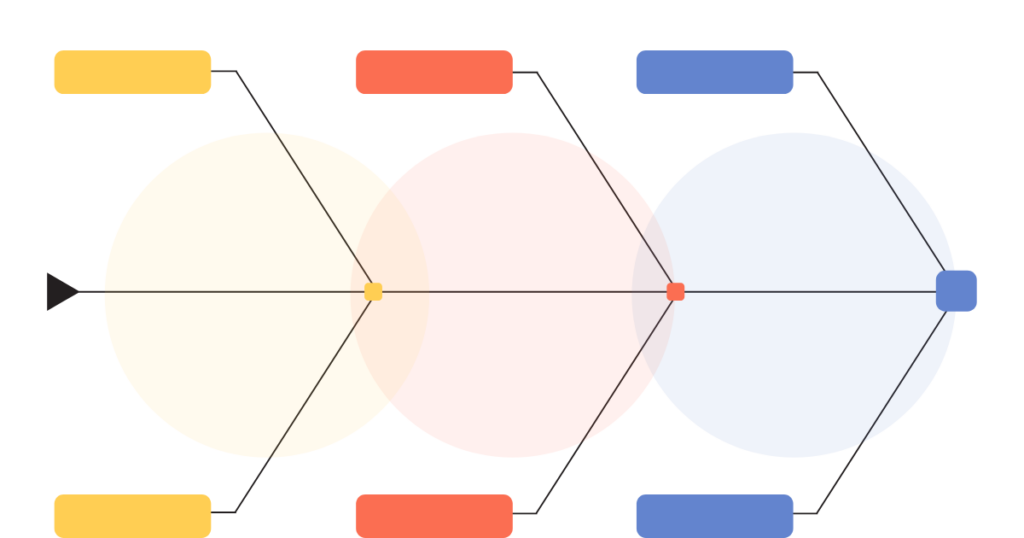
The Fishbone Diagram, also known as the Ishikawa or Cause-and-Effect Diagram, is one of the most widely used tools in root cause analysis. It appears in healthcare quality improvement projects, patient safety investigations, manufacturing problem solving, and organizational performance reviews. Its popularity stems from its simplicity. Teams can quickly organize ideas, explore multiple perspectives, and identify a broad range of factors that may have contributed to a problem.
Yet despite its widespread use, many fishbone sessions produce an uncomfortable outcome: a large diagram covered with potential causes but little clarity about which factors actually matter. The problem is not the tool itself. The problem is how the tool is often interpreted.
Fishbone diagrams are excellent for expanding thinking. They are much less effective for determining which causes are most important. When organizations mistake brainstorming output for causal evidence, they risk pursuing weak interventions while overlooking the factors that truly drive performance.
The Fishbone Diagram’s Real Purpose
A fishbone diagram is fundamentally a hypothesis-generation tool. It helps teams identify possible causes and organize them into categories such as People, Process, Equipment, Environment, Materials, or Management. The goal is to broaden thinking and prevent premature conclusions (Project Cubicle, 2025).
The key word is possible. Every branch on a fishbone represents a theory about what may have contributed to the outcome. The diagram itself does not prove that any listed factor caused the event. It simply creates a structured way to explore possibilities (Project Cubicle, 2025; MSD Prevention Guideline for Ontario, n.d.). Problems emerge when teams begin treating these possibilities as established facts.
The Critical Difference Between Contributing Factors and Causal Factors
One of the most common weaknesses in fishbone analysis is the failure to distinguish between contributing factors and causal factors.
Contributing Factors
Contributing factors are conditions that may have influenced an event or increased the likelihood of a problem occurring. They are often present in the environment but may not directly explain why the event happened.
Examples include:
- Staff workload
- Equipment age
- Unit layout
- Organizational culture
- Time pressures
- Communication challenges
These factors may create conditions that make errors more likely, but their presence alone does not establish causation.
Causal Factors
Causal factors have a demonstrable connection to the event. If the factor were removed, altered, or controlled, the outcome would likely have changed.
For example:
- A mislabeled medication leading directly to administration of the wrong drug
- Missing maintenance on a device that subsequently failed
- An omitted verification step that allowed a defect to reach a patient
In practice, fishbone diagrams often combine both types of factors without distinction. A team may generate twenty or thirty items during brainstorming, but only a handful may actually have a meaningful causal relationship with the outcome (Behrhorst et al., 2025; Najafpour et al., 2016).
This distinction matters because improvement efforts directed at contributory factors alone may produce little measurable impact.
The Danger of Equal Weighting
Another hidden limitation of fishbone diagrams is that every item appears visually equal. A factor listed on one branch occupies roughly the same amount of space as every other factor. As a result, teams may unconsciously assume that all identified causes deserve similar attention.
Reality is rarely that balanced. Research examining root cause analyses in healthcare found that adverse events often involve numerous contributory factors, but their relative influence varies substantially (Najafpour et al., 2016). Some factors may have a strong effect on the outcome, while others have only a minor influence.
A fishbone diagram does not show:
- Magnitude of impact
- Frequency of occurrence
- Strength of evidence
- Probability of recurrence
- Degree of control available to the organization
Consequently, a factor mentioned once during brainstorming may receive the same attention as a factor repeatedly supported by data. This can create a false sense of completeness. Teams leave the meeting with a comprehensive-looking diagram but without any method for determining where intervention will yield the greatest benefit.
When Brainstorming Becomes Speculation
Fishbone diagrams are only as good as the information used to build them. In many investigations, participants rely heavily on experience, assumptions, and recollections. While these perspectives are valuable, they can also introduce bias. Dominant voices, prior beliefs, and organizational narratives may shape the discussion more than objective evidence (Project Cubicle, 2025).
For example, if a unit has experienced staffing challenges for several months, staffing issues may appear on every fishbone diagram regardless of whether they contributed to the specific event under investigation. The resulting diagram may be filled with plausible explanations rather than verified causes. This is one reason why experienced investigators view the fishbone as the beginning of analysis rather than the end.
Why Fishbones Should Lead to Investigation, Not Conclusions
The most effective use of a fishbone diagram is as a roadmap for further inquiry. After brainstorming potential causes, investigators should ask:
- What evidence supports this factor?
- How frequently does it occur?
- Is there a clear causal pathway?
- Can we verify the relationship with data?
- Does this factor differentiate cases where the event occurred from cases where it did not?
Without these follow-up questions, teams risk confusing ideas with evidence. Many root cause analysis frameworks emphasize the need to verify suspected causes through interviews, observations, process reviews, audits, timeline reconstruction, or data analysis before identifying root causes (Charles et al., 2016; Behrhorst et al., 2025). The fishbone helps identify where to look. It does not determine what is true.
Moving from Expansion to Prioritization
One useful way to think about fishbone diagrams is that they answer only the first of two essential questions:
Question 1: What could have contributed to this problem?
Question 2: Which of these factors matter most?
Fishbone diagrams excel at the first question. They struggle with the second. This is why many organizations combine fishbone analysis with other methods, such as:
- Data collection and validation
- Pareto analysis
- Process mapping
- Five Whys analysis
- Failure Modes and Effects Analysis (FMEA)
- Cause verification through direct observation
These additional approaches help move from a long list of possibilities toward a smaller set of actionable, evidence-supported causes (Tagaram & Chen, 2024).
A Better Way to Facilitate Fishbone Sessions
Rather than asking participants simply to list causes, facilitators can improve fishbone effectiveness by categorizing each factor according to its level of certainty.
For example:
Confirmed Cause: What evidence shows this contributed?
Likely Cause: What evidence suggests this may have contributed?
Possible Cause: What makes us suspect this factor?
Assumption: What are we currently guessing?
This simple distinction helps prevent brainstorming output from being mistaken for verified findings. It also creates a clear transition from idea generation to investigation.
Conclusion
Fishbone diagrams remain valuable tools in healthcare quality and patient safety because they encourage broad, systems-based thinking and help teams avoid premature conclusions. They are particularly useful for uncovering potential contributors that might otherwise be overlooked.
However, their greatest strength can also become their greatest weakness. Fishbones generate possibilities, not proof. They do not distinguish between contributing factors and causal factors. They do not measure impact. They do not prioritize causes. And they do not verify whether a suspected factor actually influenced the outcome.
The most effective investigators therefore treat a fishbone diagram as a starting point rather than a final answer. A completed fishbone should not signal the end of root cause analysis. It should signal the beginning of a more rigorous investigation.
Fishbone diagrams are excellent for expanding thinking but poor for prioritizing causes. Their true value lies in generating hypotheses that must be tested, validated, and prioritized before meaningful improvement action can occur.
References
Behrhorst, J., Gale, B., & Van, C. M. (2025). The evolution of root cause analysis. PSNet, Agency for Healthcare Research and Quality. The Evolution of Root Cause Analysis (PSNet)
Charles, R., Hood, B., Derosier, J. M., Gosbee, J. W., Li, Y., Caird, M. S., Biermann, J. S., & Hake, M. E. (2016). How to perform a root cause analysis for workup and future prevention of medical errors: A review. Patient Safety in Surgery, 10(20). DOI: https://doi.org/10.1186/s13037-016-0107-8. Patient Safety in Surgery Article
Najafpour, Z., Jafary, M., Saeedi, M., Jeddian, A., & Adibi, H. (2016). Effect size of contributory factors on adverse events: An analysis of RCA series in a teaching hospital. Journal of Diabetes & Metabolic Disorders, 15(27). DOI: https://doi.org/10.1186/s40200-016-0249-3. Full Article (PubMed Central)
MSD Prevention Guideline for Ontario. (n.d.). Root cause analysis. MSD Prevention Guideline for Ontario Root Cause Analysis Resource
Project Cubicle. (2025). Cause and effect diagram: Fishbone / Ishikawa root cause analysis.
Fishbone / Ishikawa Root Cause Analysis Article