
Articles

Rethinking Process Mapping in Healthcare
The Process We Think We Have vs. The Process We Actually Use In healthcare, the distance between policy and practice is rarely zero. Standard operating…

Beyond Human Error: Why Your Safety Investigations Must Focus on Failed Defenses
Understanding Barrier Analysis and the Systems That Were Supposed to Protect Your Patients When something goes wrong in a healthcare setting: a medication error, a…

What Changed? The Most Underused Question in Healthcare Investigations
When healthcare organizations investigate adverse events, near misses, healthcare-associated infections, medication errors, or patient safety incidents, the focus often centers on identifying what went wrong…
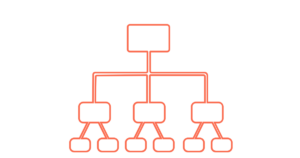
Thinking Like an Engineer in a Healthcare World: Using Fault Tree Analysis to Understand Complex Failures
When a serious patient safety event occurs, healthcare organizations often search for “the” root cause. Investigators may identify a communication breakdown, a missed assessment, a…

The Missing Link Between What Happened and Why It Happened: Why Chronology Matters in Root Cause Analysis
In healthcare investigations, teams are often under pressure to identify causes quickly. Following a patient harm event, healthcare-associated infection, medication error, or near miss, the…
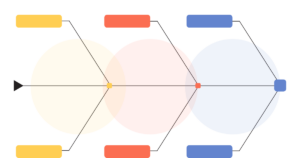
Why Fishbone Diagrams Often Create Long Lists but Few Insights
The Fishbone Diagram, also known as the Ishikawa or Cause-and-Effect Diagram, is one of the most widely used tools in root cause analysis. It appears…

When the Five Whys Finds the Wrong Root Cause
The Five Whys is one of the most widely taught root cause analysis tools in healthcare (Ohno, 1988; Serrat, 2017). The concept is simple: start…

Why Comparison at Work Triggers Envy and How It Quietly Shapes Performance
Workplace envy is the quiet discomfort that arises when you compare your progress, recognition, or opportunities to someone else’s and feel that you are falling…

Why Leading Without Being the Expert Feels So Uncomfortable and What Leadership Actually Requires
Leadership confidence is the ability to guide people, make decisions, and hold responsibility even when you do not have all the answers or technical expertise…

Why High Bundle Compliance Doesn’t Always Mean Low CLABSI Risk
Central line-associated bloodstream infections (CLABSIs) remain one of the most closely monitored healthcare-associated infections because of their severity, preventability, and impact on patient outcomes (Centers…
- « Previous
- 1
- 2
- 3
- 4
- Next »